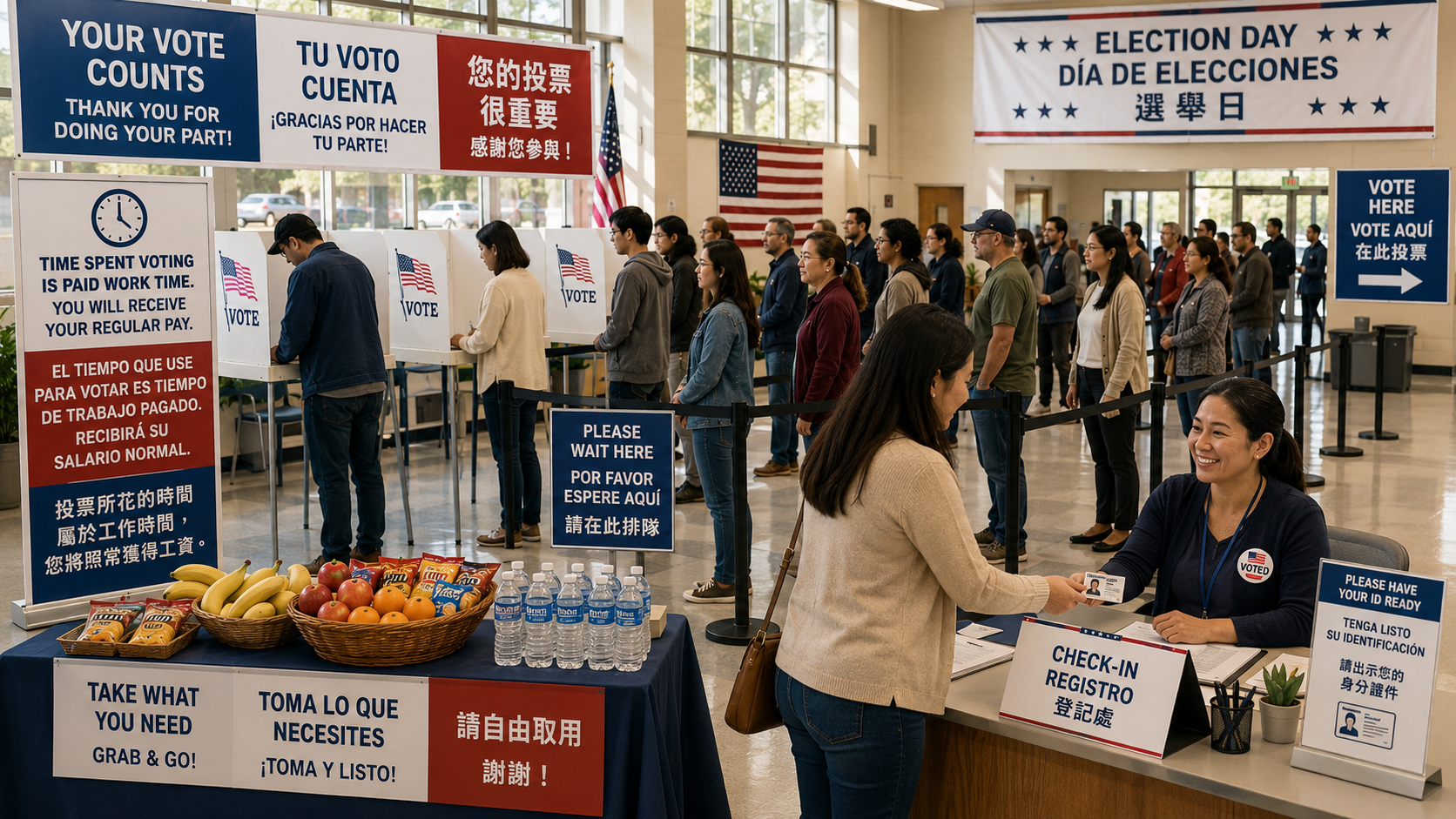
對選舉程序的信心是民主制度的基石
對選舉程序的信心是民主制度的基石
Confidence in the Electoral Process Is the Foundation of Democracy
《論語·顏淵》第十二篇第七章記載:子貢問政。子曰:「足食,足兵,民信之矣。」子貢曰:「必不得已而去,於斯三者何先?」曰:「去兵。」子貢曰:「必不得已而去,於斯二者何先?」曰:「去食。自古皆有死,民無信不立。」
Book XII, ‘Yan Yuan,’ of the Analects records the following exchange: Zigong asked about the principles of government. Confucius replied, ‘Provide sufficient food, maintain adequate military strength, and earn the trust of the people.’ Zigong then asked, ‘If one of these three must be sacrificed, which should go first?’ Confucius answered, ‘Military strength.’ Zigong asked again, ‘If one of the remaining two must also be sacrificed, which should it be?’ Confucius replied, ‘Food. Since ancient times, death has been inevitable for all. But without the trust of the people, a nation cannot stand.’
孔子將治國所需歸納為三件事:糧食、軍隊和人民的信任。當不得不捨棄時,可以去兵,可以去食,卻不能失去人民的信任,因為「民無信不立」。兩千五百年前的這句話,放在今天的民主政治中,依然具有深刻意義。
Confucius reduced the essentials of good government to three pillars: food, military strength, and the trust of the people. When forced to choose, he argued that military power could be sacrificed, and even food could be relinquished, but public trust could never be abandoned, for ‘without the trust of the people, a nation cannot stand.’ More than twenty-five centuries later, those words remain profoundly relevant to modern democracy.
民主制度的核心並不僅僅是投票,更重要的是讓所有參與者都相信選舉程序是公平的,並能夠接受最終結果。如果失敗的一方始終懷疑程序本身存在缺陷,那麼無論結果如何,民主都會陷入長期的合法性危機。因此,一個民主國家最重要的資產,不是投票方式有多便利,而是人民對選舉制度有多大的信任。
The essence of democracy is not voting alone. More importantly, every participant must have confidence that the electoral process is fair and be willing to accept the outcome. If the losing side continues to believe that the process itself was fundamentally flawed, democracy will inevitably face a prolonged crisis of legitimacy, regardless of who wins. The greatest asset of a democratic nation is therefore not the convenience of its voting system, but the degree of public confidence in the integrity of its elections.
真正合法的選舉,不只是統計了多少張選票,更應當保證每一張選票都來自真正具有投票資格、並主動參與公共事務的公民。投票本身是一種公民責任,而不是一種完全沒有成本的消費行為。一個人願意花時間了解候選人、了解政策,親自前往投票地點,出示合法身份證件,完成投票程序,這本身就是對國家公共事務的一種參與和承諾。
A truly legitimate election is not defined merely by the number of ballots counted. Every vote should come from a legally qualified citizen who has chosen to participate in public life. Voting is a civic responsibility, not a cost-free consumer transaction. Taking the time to learn about the candidates and their policies, appearing in person at the polling place, presenting valid identification, and completing the voting process are themselves acts of civic participation and public commitment.
因此,選舉應當具有一定的儀式感。
For that reason, elections should retain a meaningful sense of civic ritual.
這種儀式感並不是形式主義,而是在提醒每一位公民:今天所決定的,並不是一件私人事務,而是國家未來的發展方向。參與者付出時間、精力,甚至承擔一定的不便,正體現了民主政治的嚴肅性。一個國家如果為了照顧那些並不關心公共事務、不願付出任何參與成本的人,而不斷降低投票門檻,最終可能削弱的不是便利,而是整個制度的公信力。
This sense of civic ritual is not an exercise in formalism. It reminds every citizen that what is being decided is not a private matter, but the future direction of the nation. The time, effort, and even inconvenience required of voters reflect the seriousness of democratic self-government. If a nation continually lowers the threshold for participation in order to accommodate those who have little interest in public affairs or are unwilling to invest any effort in civic responsibility, what may ultimately be weakened is not inconvenience, but the credibility of the entire electoral system.
現代選舉制度常常強調「便利性」,例如擴大郵寄投票、延長投票期限等措施。支持者認為,這能夠提高投票率,使更多符合資格的選民參與政治。然而,便利性並不是民主唯一追求的目標。任何制度設計都應當同時考慮完整性、效率和公眾信任。
Modern electoral systems often place considerable emphasis on convenience by expanding mail-in voting, extending voting periods, and adopting similar measures. Supporters argue that these policies increase voter turnout and enable more eligible citizens to participate in the political process. Yet convenience is not the only objective of democracy. Every electoral system should also be evaluated by its integrity, its efficiency, and the confidence it inspires among the public.
以郵寄投票為例,其優勢在於提高了參與便利,但也帶來了新的行政挑戰。例如,大量郵寄選票需要逐一核驗、處理簽名比對、處理問題選票,這需要投入大量人力、時間和財政資源。與此同時,簽名本身並不是一種穩定的身份識別方式。人的簽名可能隨著年齡、疾病、書寫環境等因素發生變化,也存在被模仿的可能。因此,審核過程中既可能誤判合法選票,也可能無法識別個別違規行為。這些問題並不意味著郵寄投票一定會導致違法行為,但確實增加了制度運行的複雜性,並可能影響公眾對程序的信任。
Mail-in voting illustrates this trade-off. Its principal advantage is that it makes participation more convenient, but it also introduces new administrative challenges. Large numbers of mailed ballots must be individually verified, signatures compared, and questioned ballots reviewed, all of which require substantial personnel, time, and public resources. At the same time, a signature is not a fixed or foolproof form of identification. It may change over the course of a person’s life because of age, illness, or differences in writing conditions, and it can also be imitated. As a result, election officials may mistakenly reject valid ballots while failing to detect some irregular ones. None of this necessarily means that mail-in voting leads to unlawful voting, but it does make the electoral process more complex and may affect public confidence in its integrity.
制度設計最重要的原則,不應當是依賴事後調查,而應當盡可能減少值得懷疑的空間。正如銀行不會把防止詐騙完全寄託於事後追查,而是通過身份驗證、多重認證等方式降低風險,選舉制度也應盡量在程序設計階段減少爭議,而不是主要依賴事後調查來恢復公眾信任。
The foremost principle of institutional design should not be reliance on investigations after the fact, but the reduction of opportunities for doubt in the first place. Banks do not depend solely on post-fraud investigations; they reduce risk through identity verification, multi-factor authentication, and other preventive safeguards. Electoral systems should follow the same principle by minimizing potential disputes through sound procedural design, rather than relying primarily on retrospective investigations to restore public confidence.
有人認為,只要沒有發現足以改變結果的違法行為,就說明制度沒有問題。然而,從制度設計的角度來看,程序的可信度本身就是制度價值的重要組成部分。一個程序如果讓大量公民長期產生懷疑,即使最終無法證明存在足以改變結果的違法行為,其政治成本仍然是真實存在的。民主制度不僅需要公平,更需要讓人民相信它是公平的。
Some argue that if no unlawful conduct capable of changing the outcome is found, then the system itself should be regarded as sound. From the standpoint of institutional design, however, the credibility of the process is itself a fundamental value. If a procedure leaves large numbers of citizens with persistent doubts, the political cost remains real even if no violation sufficient to alter the outcome is ultimately established. Democracy requires not only fairness, but also public confidence that the process is fair.
臺灣與美國的不同選擇
臺灣與美國在選舉制度上的不同取向,提供了一個值得思考的比較。
The different approaches adopted by Taiwan and the United States toward election administration offer a comparison worthy of careful reflection.
臺灣目前以現場投票為主,海外符合資格的選民若希望參與,通常需要返回臺灣投票。這樣的制度增加了投票成本,卻強化了身份確認和程序的一致性。儘管存在不便,臺灣重大選舉的投票率長期維持在較高水準,顯示許多選民願意為了公共事務付出時間與成本。與此同時,臺灣社會對於選舉程序本身的討論,更多集中於政策競爭,而不是投票方式本身。
Taiwan relies primarily on in-person voting. Eligible voters living overseas generally must return to Taiwan in order to cast their ballots. While this approach increases the cost of participation, it also reinforces identity verification and procedural consistency. Despite the inconvenience, voter turnout in Taiwan’s major elections has remained consistently high, suggesting that many citizens are willing to devote both time and personal effort to matters of public importance. Public debate in Taiwan has therefore focused far more on policy competition than on the voting process itself.
美國則採取聯邦制,各州制度差異很大。一些州強調現場投票和身份核驗,另一些州則更加重視郵寄投票和投票便利。在這些制度安排下,不同政治陣營對程序公平性的評價也存在明顯分歧。近年來,圍繞郵寄投票、身份證要求、計票程序等問題的爭論不斷,反映出便利性與公眾信任之間的張力仍然存在。
The United States, by contrast, operates under a federal system in which election procedures vary considerably from state to state. Some states place greater emphasis on in-person voting and voter identification, while others give higher priority to mail-in voting and voter convenience. Under these differing approaches, political groups have often reached markedly different conclusions about the fairness of the electoral process. In recent years, continuing debates over mail-in voting, voter identification requirements, and vote-counting procedures have underscored the ongoing tension between accessibility and public confidence.
對於像加州這樣人口眾多、流動人口比例較高的地區而言,如何既保障符合資格選民的投票權,又讓不同政治立場的公民都相信選舉程序公平,尤其具有挑戰性。任何制度設計都應努力降低爭議,而不是增加爭議;努力提高透明度,而不是增加複雜性。
For jurisdictions such as California, where the population is large and demographic mobility is high, the challenge is particularly significant: protecting the voting rights of eligible citizens while ensuring that people across the political spectrum have confidence in the fairness of the electoral process. The goal of institutional design should be to reduce controversy rather than invite it, and to increase transparency rather than complexity.
民主制度最終依賴的,不是法律條文,而是人民共同相信這些條文是公平的。糧食可以不足,軍隊可以削弱,但如果人民不再相信國家的制度,民主便失去了立足之本。
In the end, democracy rests not merely on constitutional provisions or statutory law, but on the shared belief that those rules are fair. A nation may endure shortages of food or reductions in military strength, but once its people lose confidence in the institutions that govern them, democracy loses the very foundation upon which it stands.
孔子兩千五百年前所說的「民無信不立」,放在今天,依然是民主政治最重要的原則之一。真正堅固的民主,不在於把投票變得毫無門檻,而在於建立一套能夠讓勝者安心、敗者服氣、社會共同信任的選舉程序。只有當程序值得信賴時,選舉結果才真正具有合法性;只有當人民相信程序,民主制度才能長治久安。
Confucius’ words from twenty-five centuries ago—’Without the trust of the people, a nation cannot stand’—remain one of the enduring principles of democratic government. A resilient democracy is not defined by making voting entirely effortless, but by establishing an electoral process that winners can embrace with confidence, losers can accept with dignity, and society as a whole can trust. Only when the process itself is worthy of confidence can the outcome command legitimacy. Only when the people trust the process can democracy enjoy lasting stability.
2026年8月2日 · August 2, 2026