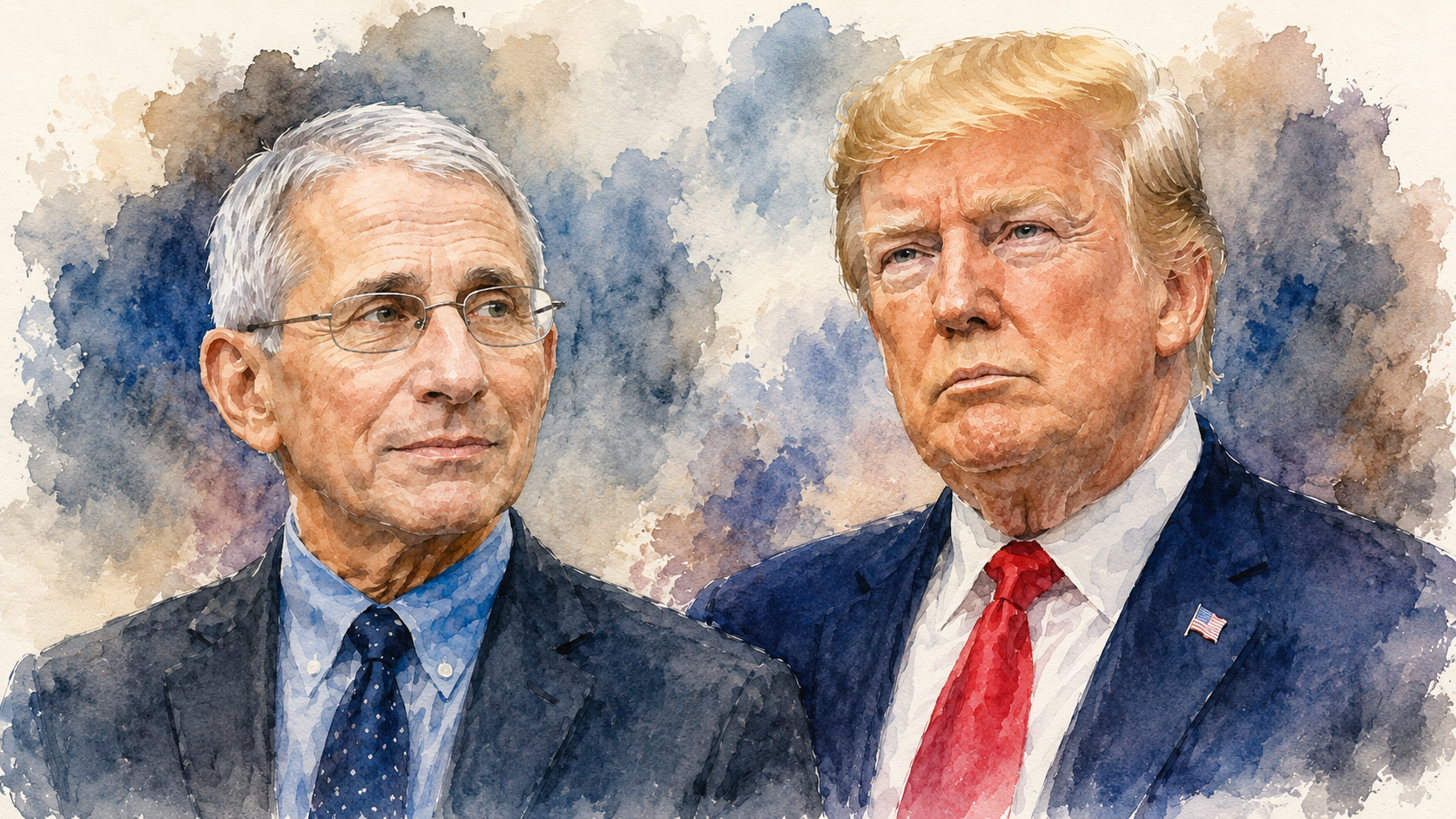
福奇與川普:一段共同歷史的兩個不同畫像
福奇與川普:一段共同歷史的兩個不同畫像
Fauci and Trump: Two Portraits of the Same American Moment
在當代美國,很少有兩個人像安東尼・福奇(Anthony Fauci)與唐納德・川普(Donald Trump)這樣,同時成為同一段歷史的核心象徵,卻又被塑造成截然不同的畫像。
Few figures in modern America have come to symbolize the same historical era as vividly—and as differently—as Anthony Fauci and Donald Trump.
他們共同經歷了2016年至2026年這十年的劇烈動盪——新冠疫情、政治極化、制度信任危機,以及圍繞科學、法律與民主制度展開的一連串激烈爭論。然而,在不同政治陣營的敘事中,兩人卻分別被奉為英雄,也分別被視為罪人。
Together they stood at the center of the turbulent decade from 2016 to 2026—a period shaped by the COVID-19 pandemic, political polarization, declining trust in institutions, and fierce debates over science, law, and democracy. Yet each emerged as both hero and villain, depending entirely on who was telling the story.
這種分裂早已超越了一般的政治分歧,而是事實本身逐漸被黨派化的結果。同一組事件,在一方眼中是救贖的故事,在另一方眼中卻是罪與罰的歷史。
This divide extends far beyond ordinary political disagreement. It reflects a deeper reality in which even shared facts have become partisan. The same events are remembered as stories of redemption by one side and stories of guilt by the other.
福奇:科學英雄與「沉默的罪犯」
福奇的重要經歷相當清晰。他長期擔任美國國家過敏與傳染病研究所(NIAID)所長,在新冠疫情期間成為美國政府公共衛生政策最具代表性的面孔。他推動疫苗研發,倡導社交距離與口罩政策,也曾公開否認實驗室洩漏具有可信度,並因增益功能研究(Gain-of-Function Research)的資助問題而長期捲入爭議。
The major milestones of Fauci’s public career are well documented. For decades he served as Director of the National Institute of Allergy and Infectious Diseases (NIAID), eventually becoming the public face of America’s pandemic response. He championed vaccine development, promoted masking and social distancing, dismissed the laboratory-leak hypothesis during the early stages of the pandemic, and later found himself at the center of continuing disputes over U.S. funding related to gain-of-function research.
2025年1月,拜登在卸任前向福奇簽署了預防性的全面聯邦赦免,涵蓋其任職期間以及疫情相關工作的聯邦法律責任。2026年7月29日,在共和黨主導的美國參議院聽證會上,福奇依照律師建議,超過一百次援引《美國憲法》第五修正案,拒絕回答有關病毒起源、研究資金流向,以及其公開與私下言論是否一致等問題。
In January 2025, just before leaving office, President Joe Biden granted Fauci a sweeping preemptive federal pardon covering actions connected with his government service during the pandemic. On July 29, 2026, appearing before a Republican-led Senate hearing, Fauci—following the advice of counsel—invoked the Fifth Amendment more than one hundred times, declining to answer questions concerning the origins of COVID-19, research funding, and apparent differences between his public statements and private communications.
在支持者眼中,福奇代表的是理性、科學與公共責任。疫情爆發初期,面對一種幾乎毫無人類經驗可循的新病毒,他承受巨大的政治壓力,始終依據當時掌握的科學證據提出建議,推動疫苗與公共衛生措施,挽救了無數生命。對他的質疑,被視為反智主義與陰謀論的延伸;拜登的赦免,被認為是保護公職人員免於政治報復的必要措施;而援引第五修正案保持沉默,也只是每一位公民依法享有的憲法權利。
To his supporters, Fauci embodies scientific integrity, rational decision-making, and public service. Faced with a virus unlike anything seen in generations, they argue, he relied on the best evidence available at the time, helped accelerate vaccine development, and guided public-health measures that ultimately saved countless lives. Criticism of Fauci is therefore viewed as an extension of anti-scientific thinking and conspiracy theories. Biden’s pardon is seen as necessary protection against politically motivated prosecution, while invoking the Fifth Amendment is regarded simply as the constitutional right available to every American citizen.
在批評者眼中,呈現的卻是另一幅完全不同的畫像。他們認為,福奇早期壓制了實驗室洩漏假說的公開討論,透過中間機構資助具有高度風險的病毒研究,公開說法與私人電子郵件內容存在明顯落差,並且過度推動封鎖、疫苗強制措施及其他公共衛生限制,最終導致社會信任急劇崩解。
Critics, however, see an entirely different figure. In their telling, Fauci discouraged early discussion of the laboratory-leak hypothesis, helped channel federal funding toward risky virus research through intermediary organizations, and displayed significant inconsistencies between his public statements and private communications. They also argue that prolonged lockdowns, vaccine mandates, and other sweeping public-health measures inflicted lasting damage on public trust.
在這種敘事裡,預防性赦免被視為權力庇護;而全面援引第五修正案拒絕作答,更被不少人解讀為「若無其事,何須沉默」的象徵。於是,同一個人,在一方眼中是科學英雄;在另一方眼中,幾乎成了尚未被充分追究責任的公共人物。
Within this narrative, the preemptive pardon is interpreted as political protection rather than justice, while his repeated invocation of the Fifth Amendment is viewed less as a constitutional safeguard than as evidence that uncomfortable questions remain unanswered. Thus the same public official becomes two entirely different historical characters: a scientific hero to one audience, an official who has yet to be fully held accountable to another.
法律上,福奇從未被刑事定罪。預防性赦免大幅降低了其面臨聯邦刑事追訴的可能性,而援引第五修正案則使他避免在公開聽證中作出可能帶來法律風險的陳述。因此,他的歷史定位也呈現出高度分裂:一方可能將他記作疫情時代科學的守護者;另一方則可能將他視為掩蓋真相與官僚傲慢的象徵。
Legally, Fauci has never been convicted of a crime. The presidential pardon largely removed the prospect of federal prosecution, while the Fifth Amendment shielded him from providing testimony that might expose him to additional legal risk. His place in history therefore remains profoundly contested. To some, he will be remembered as the scientist who guided America through its greatest public-health crisis in a century. To others, he will stand as a symbol of institutional opacity and bureaucratic overconfidence.
川普:民主威脅與「被迫害的總統」
川普的政治軌跡同樣充滿標誌性的歷史事件。2016年,他贏得美國總統大選,任內經歷中美貿易戰、最高法院大法官任命,以及新冠疫情初期的應對。2019年,他因烏克蘭電話事件遭眾議院彈劾;2021年,又因國會山事件再次遭到彈劾,兩次均在參議院獲判無罪。
Trump’s political career has likewise been defined by a series of landmark events. Elected president in 2016, he governed through a trade confrontation with China, reshaped the Supreme Court through multiple appointments, and led the nation during the opening phase of the COVID-19 pandemic. In 2019, the House of Representatives impeached him over his dealings with Ukraine. Following the events of January 6, 2021, he was impeached a second time. On both occasions, however, the Senate acquitted him.
2024年,他在紐約州「封口費」案件中遭陪審團裁定有罪,成為美國歷史上第一位被刑事定罪的前總統;然而,就在同一年,他再次贏得總統大選,重返白宮。
In 2024, a New York jury convicted Trump in the so-called hush-money case, making him the first former American president to receive a criminal conviction. Yet, later that same year, he returned to the White House after winning another presidential election.
支持者將川普視為挑戰建制的代表與民意的化身。在他們看來,兩次彈劾都是黨派報復;紐約州的刑事定罪則代表法律被政治化,是所謂「法律戰」(lawfare)的典型案例。川普兩度贏得全國性選舉,被視為人民最終仍選擇相信他的證明。
To his supporters, Trump represents a challenge to the political establishment and a voice for ordinary voters. They regard both impeachments as partisan retaliation, while describing the New York conviction as the clearest example of what they call ‘lawfare’—the use of legal institutions to achieve political ends. His victories in two nationwide elections are cited as evidence that millions of Americans continued to place their trust in him despite years of relentless opposition.
在支持者的敘事中,他挑戰了華盛頓既有的政治文化,敢於對抗主流媒體、聯邦官僚體系,以及所謂的「深層政府」(deep state),因此成為建制力量共同打壓的對象。
Within this narrative, Trump confronted Washington’s entrenched political culture, openly challenged major media organizations and the federal bureaucracy, and became the principal target of what his supporters often describe as the ‘deep state.’ Far from disqualifying him, they believe these conflicts confirmed that he was willing to confront institutions others would not.
反對者看到的,卻是完全不同的另一幅畫像。他們認為,川普破壞了民主規範,加劇社會分裂,試圖推翻選舉結果,並因一系列行為而面臨法律後果。在他們眼中,兩次彈劾與後續刑事定罪,都是民主制度對越界行為的正常回應,而非政治迫害。
His critics, however, tell an entirely different story. They argue that Trump weakened democratic norms, deepened political division, sought to overturn the outcome of a presidential election, and ultimately faced legal consequences for crossing constitutional and legal boundaries. In their view, the impeachments and subsequent criminal conviction were not acts of persecution but the ordinary operation of democratic institutions.
川普再次當選,則被解讀為美國政治極化與民粹主義持續擴大的結果,而不是其行為獲得歷史正當性的證明。
From this perspective, Trump’s return to office reflects the continuing polarization of American politics and the enduring appeal of populism rather than a historical vindication of his conduct.
法律上,川普兩度遭眾議院彈劾,但均未獲參議院定罪;另一方面,他亦成為美國歷史上第一位遭州法院刑事定罪的前總統。因此,他的歷史定位同樣高度分裂:一方可能將他記作兩度獲得人民授權、挑戰建制的改革者;另一方則可能將他寫成衝擊美國憲政秩序最具爭議的人物之一。
Legally, Trump was impeached twice by the House of Representatives but acquitted by the Senate on both occasions. At the same time, he became the first former U.S. president ever convicted in a state criminal court. His place in history is therefore as contested as Fauci’s. To admirers, he will be remembered as a reformer who twice earned a national mandate while confronting an entrenched political establishment. To detractors, he may stand as one of the most controversial figures ever to challenge America’s constitutional order.
共同歷史下的鏡像與困境
福奇與川普的故事,構成了一組近乎鏡像的歷史。兩人都曾擁有巨大的公共影響力,都經歷了高強度的政治與法律審視,都獲得了各自支持者近乎宗教式的擁護,也都遭到對立陣營近乎徹底的道德否定。
Taken together, the stories of Fauci and Trump form an almost perfect historical mirror. Both exercised extraordinary influence over public life. Both endured relentless political and legal scrutiny. Both inspired fierce loyalty among their supporters while provoking equally uncompromising condemnation from their opponents.
一方所說的「依法追究」,在另一方眼中成了「政治迫害」;一方所強調的「憲法權利」,在另一方看來又變成了「逃避責任」。同一個事實,不同的人看到的卻是完全不同的故事。
What one side celebrates as accountability, the other condemns as political persecution. What one regards as the legitimate exercise of constitutional rights, the other interprets as an attempt to evade responsibility. The underlying facts remain largely the same, yet the stories built upon them could scarcely be more different.
這正暴露出更深層的問題:當證據的評估逐漸讓位於身份認同,當媒體與政治激勵更獎勵情緒化的敘事,而不是審慎的反思,社會便愈來愈難形成共同承認的公共事實。
Here lies the deeper challenge. When evidence gradually yields to identity, and when political and media incentives reward the strongest narratives rather than the most careful examination, a society loses its ability to sustain a common understanding of reality.
病毒究竟源自何處?封鎖政策是否得大於失?司法追訴究竟是在維護法治,還是在延續政治鬥爭?這些原本應該透過證據與理性討論回答的問題,最後卻往往變成了檢驗政治忠誠的試金石。
Where did the virus truly originate? Did pandemic restrictions ultimately produce more benefit than harm? Were criminal prosecutions defending the rule of law, or extending political conflict by judicial means? Questions that ought to invite evidence and reason increasingly became tests of partisan allegiance.
歷史最終將如何書寫福奇與川普,仍有待時間回答。如果未來仍能保有超越黨派立場的歷史反思,人們或許會對他們作出更加完整而平衡的評價;然而,以目前的情勢而言,他們更可能作為這個分裂時代最鮮明的兩個象徵而被記住。
Only time will determine how history ultimately judges Fauci and Trump. If future generations are able to revisit this era with greater distance and less partisan passion, both men may receive more balanced assessments than are possible today. For now, however, they are likely to endure as two defining symbols of an America profoundly divided.
同一段歷史,兩幅彼此衝突的畫像;同一組事實,兩種互不相容的敘事。
One chapter of history produced two irreconcilable portraits. One body of facts gave rise to two incompatible narratives.
或許多年以後,人們未必首先記得誰贏得了政治鬥爭、誰輸掉了官司,而會記得這個時代如何讓同一組事實,演變成兩個幾乎無法彼此理解的現實。這種認知上的分裂,或許才是這十年留給美國最深刻的歷史遺產。
Years from now, Americans may no longer remember every lawsuit, every hearing, or every election. What may endure instead is the memory of an era in which a shared set of facts gradually dissolved into competing realities, each sustained by its own political community. That fracture in public understanding may prove to be the most enduring legacy of America’s turbulent decade.
2026年7月29日 · July 29, 2026