三艘船,一場改變世界的海難
泰坦尼克號、加利福尼亞號與卡帕西亞號
1912年4月15日凌晨,北大西洋(North Atlantic Ocean)的寒夜中,泰坦尼克號(RMS Titanic,Royal Mail Ship Titanic,皇家郵政郵輪)在首航途中撞上冰山,最終沉沒。
泰坦尼克號是當時世界上最大的豪華郵輪,被譽為“永不沉沒”的巨輪。1912年4月10日,它從英國南安普敦(Southampton, England)啟航,計劃駛往美國紐約市(New York City, United States),船上載有2200餘名乘客和船員。4月14日深夜11時40分,郵輪撞上冰山,經過約2小時40分鐘,於4月15日凌晨2時20分完全沉沒。由於救生艇數量不足,且許多救生艇未滿員便放下海,最終只有約705人獲救。
距離泰坦尼克號最近的是加利福尼亞號(SS(Steam Ship) Californian,蒸汽貨輪)。這艘貨輪因前方冰區危險而停船過夜,距離泰坦尼克號約10至20海里(具體距離至今仍有爭議)。1912年4月14日晚上約11時30分,加利福尼亞號的無線電報員西里爾·埃文斯(Cyril Evans)結束當天值班後關閉無線電設備休息。當時國際航運尚未規定遠洋船舶必須實施二十四小時無線電值班,因此這樣的安排完全符合當時的航海慣例。就在下班之前,埃文斯曾向泰坦尼克號發出前方有大量冰山的警報。然而,泰坦尼克號的高級無線電報員傑克·菲利普斯(Jack Phillips)正忙於向加拿大紐芬蘭的開普雷斯角無線電站(Cape Race Wireless Station)傳送大量旅客積壓的私人電報,因此回覆了一句後來廣為流傳的話:”Shut up! Shut up! I am busy. I am working Cape Race.”(“別發了!我正忙著與開普雷斯角通信。”)僅僅十餘分鐘後,泰坦尼克號便撞上了冰山。
因此,當泰坦尼克號開始發出CQD(CQ Distress,由電報呼叫碼 CQ〔呼叫所有電臺〕加上代表 Distress〔遇險〕的字母 D 組成)和SOS(國際摩斯電碼遇險信號)時,加利福尼亞號的無線電設備已經關閉,未能收到任何求救電報。值班船員雖然看見遠方不斷升起白色火箭,也向船長斯坦利·洛德(Captain Stanley Lord)作了報告,但船長並未意識到這是遇險信號,沒有立即採取行動。後來,英國和美國官方調查均認為,如果加利福尼亞號能夠及時響應,很可能有機會在泰坦尼克號沉沒之前趕到現場,挽救更多生命。
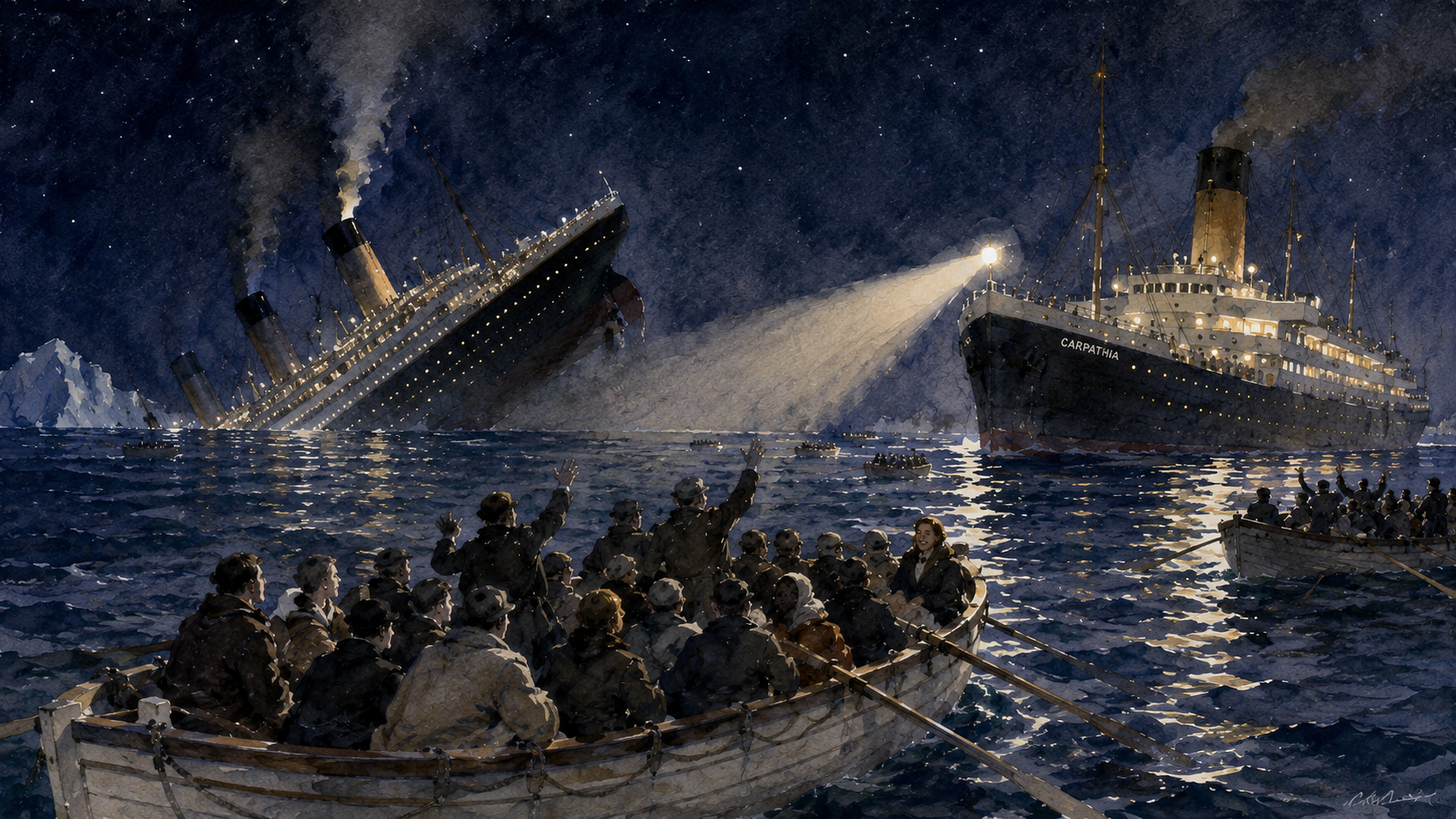
真正完成救援任務的是卡帕西亞號(RMS (Royal Mail Ship) Carpathia,皇家郵政郵輪)。它距離事故地點約58海里,遠比加利福尼亞號更遠,卻因無線電報員哈羅德·科塔姆(Harold Cottam)仍在值班,而於凌晨12時25分左右收到求救信號。船長阿瑟·亨利·羅斯特龍爵士(Captain Sir Arthur Henry Rostron)立即下令全速航行,停止一切非必要用汽,將全部蒸汽供應發動機,同時組織船員準備毛毯、熱飲、醫療用品和接收倖存者的場所。經過約三個半小時的全速航行,卡帕西亞號於凌晨4時左右抵達現場,成功救起約705名倖存者。
泰坦尼克號的沉沒,不僅是一場震驚世界的海難,更深刻改變了國際航運制度。1914年,各國簽署了《國際海上人命安全公約》(International Convention for the Safety of Life at Sea,SOLAS),規定遠洋客輪必須配備足夠所有人員使用的救生艇;國際航線上的無線電必須實行二十四小時值班制度;同時成立國際冰山巡邏隊(International Ice Patrol),持續監測北大西洋(North Atlantic Ocean)冰情,為航行船隻提供預警。
同樣的海面,同樣的夜晚,一艘成為災難的主角,一艘留下終身難以擺脫的遺憾,一艘則因無私的救援而永載史冊。
Three Ships, One Disaster That Changed the World Titanic, Californian, and Carpathia
In the early hours of April 15, 1912, on the frigid waters of the North Atlantic Ocean, the RMS Titanic (Royal Mail Ship Titanic) struck an iceberg during her maiden voyage and ultimately sank.
At the time, Titanic was the largest and most luxurious ocean liner in the world, widely celebrated as the “unsinkable” ship. On April 10, 1912, she departed Southampton, England, bound for New York City, United States, carrying more than 2,200 passengers and crew. At 11:40 p.m. on April 14, the liner collided with an iceberg. After remaining afloat for approximately 2 hours and 40 minutes, she sank completely at 2:20 a.m. on April 15. Because there were not enough lifeboats for everyone on board—and because many of the lifeboats that were launched were only partially filled—only about 705 people survived.
The vessel nearest to Titanic was the SS Californian (Steam Ship Californian), a cargo steamer that had stopped for the night because of dangerous ice conditions ahead. She lay approximately 10 to 20 nautical miles away, although the exact distance remains a matter of historical debate.
At about 11:30 p.m. on April 14, Californian’s wireless operator, Cyril Evans, completed his shift and shut down the ship’s wireless equipment before going to bed. At the time, international maritime regulations did not require ocean-going vessels to maintain twenty-four-hour wireless watch, so this practice was entirely consistent with the standards of the era.
Just before signing off, Evans had transmitted a warning to Titanic reporting extensive ice fields ahead. However, Titanic’s senior wireless operator, Jack Phillips, was occupied sending a backlog of passengers’ private telegrams to the wireless station at Cape Race, Newfoundland, Canada. Frustrated by the interruption, Phillips replied with the words that would later become famous:
“Shut up! Shut up! I am busy. I am working Cape Race.”
Little more than ten minutes later, Titanic struck the iceberg.
Consequently, when Titanic began transmitting the distress calls CQD (formed from the general call signal CQ together with the letter D for Distress) and SOS (the international Morse-code distress signal), Californian’s wireless equipment had already been switched off, and no distress messages were received.
Although members of Californian’s watch observed white rockets repeatedly rising in the distance and reported them to Captain Stanley Lord, he failed to recognize them as distress signals and did not immediately take action. Subsequent official inquiries in both Britain and the United States concluded that, had Californian responded promptly, she might well have reached the scene before Titanic disappeared beneath the sea and saved many more lives.
The ship that ultimately carried out the rescue was the RMS Carpathia (Royal Mail Ship Carpathia). She was approximately 58 nautical miles from the disaster—far farther away than Californian—yet her wireless operator, Harold Cottam, was still on duty and received Titanic’s distress message at about 12:25 a.m.
Captain Sir Arthur Henry Rostron immediately ordered the ship to proceed at full speed. Every unnecessary use of steam was stopped so that maximum power could be directed to the engines. At the same time, the crew prepared blankets, hot drinks, medical supplies, and accommodations for survivors. After racing through the night for about three and a half hours, Carpathia reached the scene at around 4:00 a.m. and successfully rescued approximately 705 survivors.
The sinking of Titanic was not only one of the world’s greatest maritime disasters; it fundamentally transformed international maritime safety.
In 1914, nations signed the International Convention for the Safety of Life at Sea (SOLAS), requiring passenger ships to carry sufficient lifeboats for every person on board. The convention also mandated continuous twenty-four-hour wireless watch on international voyages. In addition, the International Ice Patrol was established to monitor ice conditions in the North Atlantic and provide navigational warnings to ships operating in those waters.
The same ocean. The same night.
One ship became the symbol of catastrophe.
One carried the burden of a tragedy that might have been mitigated.
One earned an enduring place in history through selfless rescue.