忠誠的代價──盧塞恩的傷心獅子
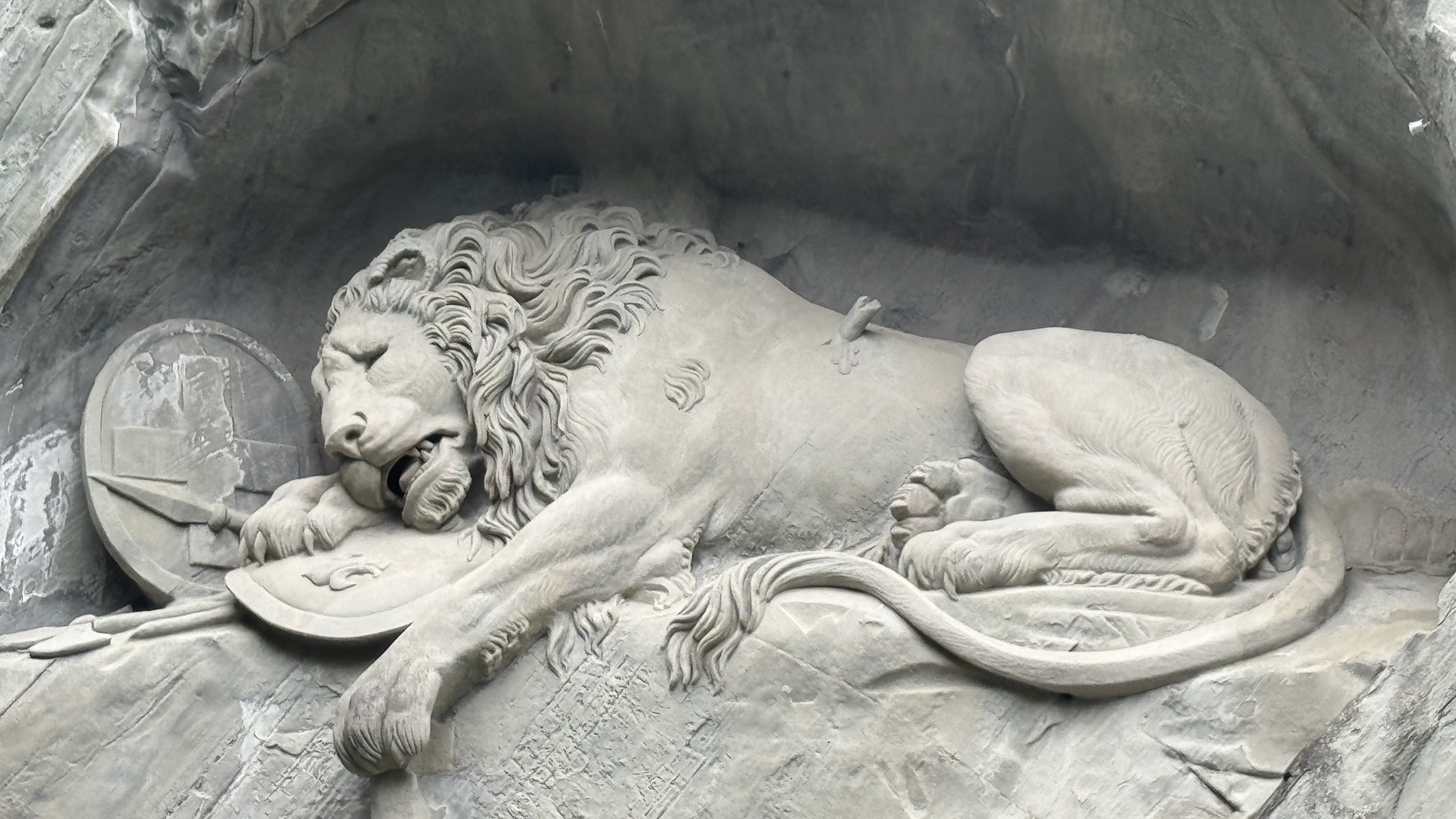
瑞士盧塞恩(Lucerne/Luzern)有一個紀念雕塑,是一隻伏臥在岩壁上的獅子。不是慶祝勝利,而是一座紀念失敗者的紀念碑。
美國作家馬克.吐溫曾說,它是“世界上最哀傷、最動人的一塊石頭(the most mournful and moving piece of stone in the world)”。
一個關於忠誠的故事
故事要回到1792年8月10日。法國大革命已經進入激烈階段,革命群眾攻打巴黎的杜伊勒里宮(Tuileries Palace)。當時負責保衛國王路易十六的,不是法國軍隊,而是約一千名瑞士衛隊(Swiss Guards)。今天很多人會覺得奇怪:為什麼法國國王會由瑞士人保護?這是因為數百年來,瑞士人以紀律嚴明、誠實守信、勇敢善戰聞名歐洲。許多歐洲王室都會僱用瑞士士兵作為近衛軍,他們不是臨時雇傭兵,而是經過正式條約招募、宣誓效忠的職業軍人。對於他們來說,誓言(Oath)高於生命。革命軍人數遠遠超過瑞士衛隊。在戰鬥中,路易十六一度命令衛隊停止抵抗、撤退,但命令送達時已太晚,戰局已經無法挽回。許多衛兵在宮中戰死,另一些投降後仍遭到殺害,整個衛隊幾乎覆滅。
獅子為什麼如此悲傷?
1821年,倖存的瑞士軍官卡爾.普菲費爾(Karl Pfyffer)發起建造這座紀念碑。丹麥雕塑家設計了一隻瀕死的雄獅:
- 長矛刺入身體;
- 獅子已經無力站起;
- 但前爪仍緊緊護著刻有法國王室百合花紋章(Fleur-de-lis)的盾牌;
- 身旁還有另一面象徵瑞士的盾牌。
整個雕塑沒有任何凱旋的姿態。它不是怒吼,而是在死亡中仍守護自己的使命。碑上的拉丁文只有一句: HELVETIORUM FIDEI AC VIRTUTI
意思是:獻給瑞士人的忠誠與勇敢。
歷史的悲劇就在這裡
真正令人感傷的,並不僅僅是他們戰死。而是他們效忠的對象失敗了。如果路易十六重新掌權,他們會成為拯救王朝的英雄。但歷史由勝利者書寫。法國革命成功以後,他們長期被描述為維護舊制度、阻擋歷史進步的人。
The Price of Loyalty — The Lion of Lucerne
In Lucerne (Luzern), Switzerland, there stands a remarkable memorial: a lion lying wounded upon a sandstone cliff. It is not a monument celebrating victory, but rather a memorial to those who fell in defeat.
The American writer Mark Twain famously described it as “the most mournful and moving piece of stone in the world.”
A Story of Loyalty
The story begins on August 10, 1792, during one of the most turbulent moments of the French Revolution. Revolutionary forces stormed the Tuileries Palace in Paris.
The soldiers defending King Louis XVI were not French troops, but approximately one thousand Swiss Guards.
To many people today, this may seem surprising: Why would the King of France be protected by Swiss soldiers?
For centuries, the Swiss had earned a reputation throughout Europe for discipline, integrity, courage, and military excellence. Many European monarchs employed Swiss Guards as their royal bodyguards. They were not temporary mercenaries, but professional soldiers recruited through formal treaties and bound by solemn oaths of loyalty.
To them, their oath was more precious than life itself.
The revolutionary forces vastly outnumbered the Swiss Guards.
During the battle, Louis XVI eventually ordered his guards to cease fighting and withdraw. By the time the order reached them, however, it was already too late. The battle had become irreversible. Many guards died defending the palace. Others surrendered only to be massacred afterward. The Swiss Guard was almost completely annihilated.
Why Is the Lion So Sorrowful?
In 1821, Karl Pfyffer, a surviving Swiss officer, initiated the construction of the memorial.
The Danish sculptor designed a dying lion:
A spear pierces its side. The lion no longer has the strength to rise. Yet its forepaw still firmly protects a shield bearing the Fleur-de-lis, the emblem of the French monarchy. Beside it rests another shield representing Switzerland.
There is nothing triumphant about the sculpture.
The lion does not roar.
Instead, it remains faithful to its duty even in death.
The monument bears only a single Latin inscription:
HELVETIORUM FIDEI AC VIRTUTI
Its meaning is:
“To the Loyalty and Bravery of the Swiss.”
The Tragedy of History
The deepest sadness of this story lies not merely in the fact that these soldiers died.
It lies in the fact that the cause to which they pledged their loyalty was defeated.
Had Louis XVI regained his throne, the Swiss Guards would likely have been remembered as heroes who saved the monarchy.
But history is often written by the victors.
After the success of the French Revolution, the Swiss Guards were for many years portrayed as defenders of the old regime and opponents of historical progress. Yet the Lion of Lucerne tells a different story. It asks the viewer to look beyond political victory and defeat, and to remember the enduring virtues of loyalty, courage, and faithfulness to one’s word—even when such faithfulness demands the ultimate sacrifice.