湖畔的石頭史詩──西庸古堡
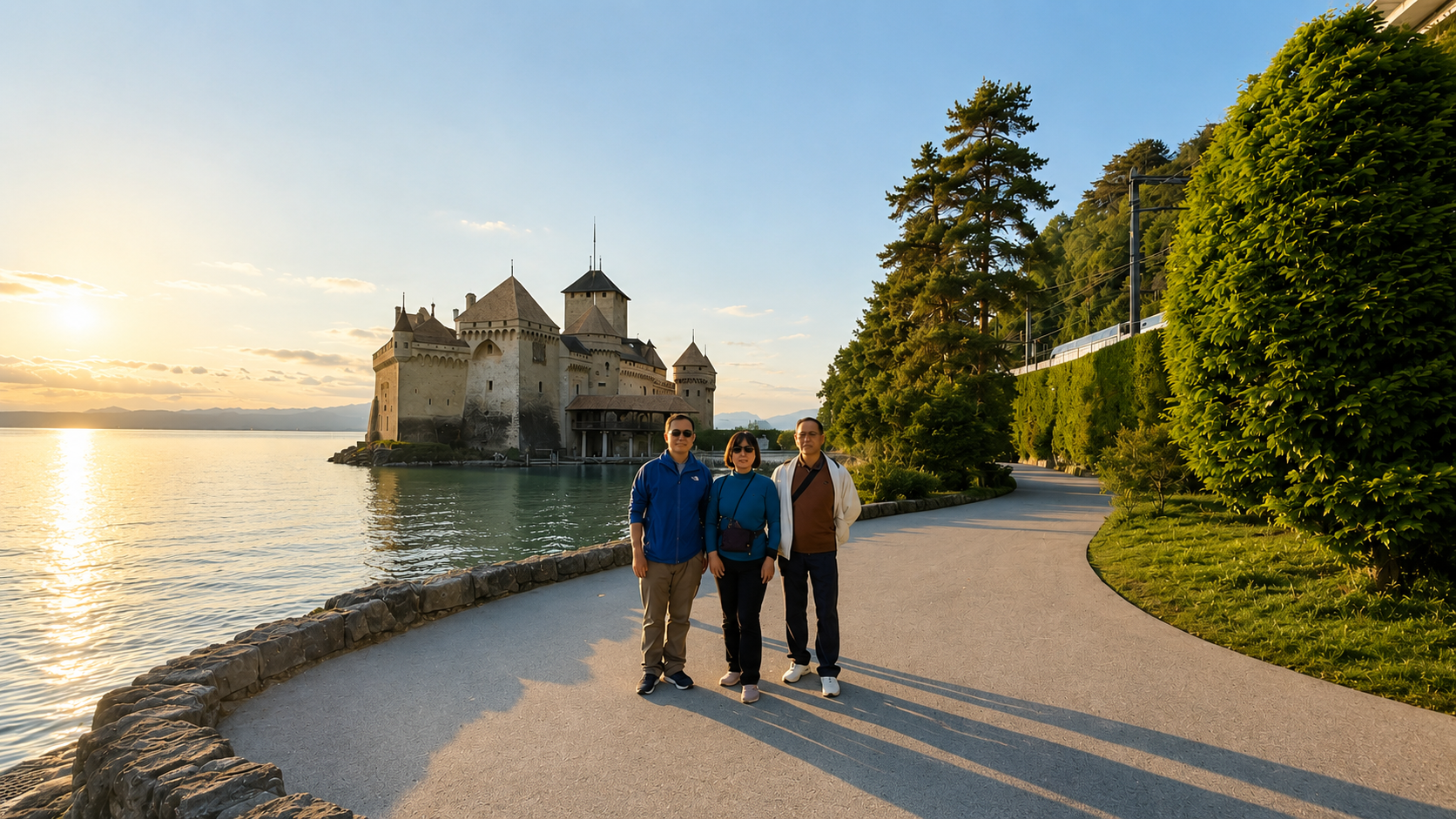
西庸古堡(Château de Chillon)位於瑞士西南部日內瓦湖(Lake Geneva)東岸,坐落於蒙特勒(Montreux)附近的一塊天然岩石小島上。城堡三面環水,一面與陸地相連,自十二世紀以來一直扼守著通往阿爾卑斯山的重要通道,是連接義大利與西歐商旅、朝聖者和軍隊的交通咽喉,因此具有極高的戰略價值。
西庸古堡最早可追溯至十一世紀,後來成為薩伏依伯爵(House of Savoy)的重要堡壘與官邸。薩伏依家族控制著阿爾卑斯山的重要山口,憑藉商路徵稅而日益強盛。今日遊客所見的大部分建築,形成於十三世紀,是典型的中世紀防禦城堡。
走進古堡,首先映入眼簾的是一座座石砌塔樓。塔樓既是瞭望台,也是最後的防線,可以俯瞰整個日內瓦湖及湖岸道路。站在塔樓上,遠處是終年積雪的阿爾卑斯群峰,近處是碧藍的湖水,很容易理解當年的守軍如何及早發現來自湖面或山谷的敵人。
古堡內陳列著大量中世紀武器,包括長劍、戰斧、長矛、十字弓、盾牌以及各式盔甲。這些兵器見證了冷兵器時代的戰爭,也反映出當時騎士文化與封建制度。厚重的鎧甲雖然提供良好的保護,卻限制了士兵的靈活性;而十字弓則大大改變了戰場格局,使受過長期訓練的騎士不再具有絕對優勢。
城堡最令人印象深刻的,是位於地下的巨大地牢。粗大的石柱直接支撐著整座城堡,昏暗潮濕的空間令人感受到中世紀監獄的壓抑。這裡曾關押過政治犯、宗教犯以及戰俘,其中最著名的是日內瓦修道院院長弗朗索瓦·博尼瓦(François Bonivard)。
博尼瓦因支持日內瓦擺脫薩伏依公國的統治,於 1530 年被囚禁於西庸古堡長達四年。他被鐵鏈鎖在石柱上,只能圍繞著柱子行走,地面至今仍可看到長年摩擦留下的痕跡。1536 年,伯恩軍隊攻佔古堡,博尼瓦終於獲得自由。
這段經歷後來深深打動了英國浪漫主義詩人喬治·戈登·拜倫(Lord Byron)。1816 年,拜倫遊覽西庸古堡後,以博尼瓦的故事創作了長詩《西庸的囚徒》(The Prisoner of Chillon),使這座原本屬於地方歷史的城堡聞名於世界。
拜倫當年還親自在囚禁博尼瓦的那根石柱上刻下自己的名字 “Byron”。如今,這個簽名依然保留在柱子上,成為古堡最著名的文學遺跡之一。可惜我離開古堡後才知道這件事,因此沒有特地回去尋找這個刻痕,也算是此次旅程留下的一個小小遺憾。
今天的西庸古堡早已失去軍事功能,但它仍靜靜矗立在日內瓦湖畔。湖光山色賦予它童話般的美麗,而厚重的石牆、冰冷的地牢與拜倫的詩篇,又使它承載著自由、信念與人性的記憶。這座城堡不僅是一件中世紀建築傑作,更是一部用石頭寫成的歐洲歷史。
A Stone Epic on the Lakeshore — Chillon Castle
Chillon Castle (Château de Chillon) stands on the eastern shore of Lake Geneva in southwestern Switzerland, perched upon a natural rocky islet near Montreux. Surrounded by water on three sides and connected to the mainland by a single narrow approach, the castle has guarded one of the principal routes through the Alps since the twelfth century. It controlled the vital corridor linking Italy with Western Europe, through which merchants, pilgrims, and armies traveled, making it one of the most strategically important fortresses in the region.
The origins of Chillon Castle date back to the eleventh century. It later became an important stronghold and residence of the House of Savoy, whose rulers controlled key Alpine passes and grew increasingly powerful by levying tolls on trade routes. Most of the structures visitors see today were built during the thirteenth century, representing a classic example of a medieval defensive castle.
Upon entering the castle, visitors are greeted by its imposing stone towers. These towers served both as lookout posts and as the fortress’s last line of defense, commanding sweeping views of Lake Geneva and the lakeside road below. From their heights, one can gaze across the deep blue waters toward the snow-capped Alps and easily imagine how medieval sentries could detect approaching enemies long before they arrived, whether by water or through the mountain valleys.
Throughout the castle are extensive displays of medieval weaponry, including longswords, battle axes, spears, crossbows, shields, and a variety of suits of armor. These weapons bear witness to the age of hand-to-hand warfare while reflecting the chivalric culture and feudal society of medieval Europe. Heavy armor provided excellent protection but greatly reduced a soldier’s mobility. The crossbow, by contrast, transformed the battlefield, enabling relatively untrained soldiers to challenge mounted knights who had spent years mastering their craft.
Perhaps the castle’s most unforgettable feature is its vast underground dungeon. Massive stone columns support the entire structure above, while the dim, damp chambers evoke the oppressive atmosphere of a medieval prison. Over the centuries, the dungeon held political prisoners, religious dissenters, and prisoners of war. Among them, the most famous was François Bonivard, the prior of Geneva.
Bonivard supported Geneva’s struggle to free itself from the rule of the Duchy of Savoy. In 1530, he was imprisoned in Chillon Castle, where he remained in chains for four years. Shackled to a massive stone pillar, he could do little more than walk in circles around it. Even today, visitors can still see the worn groove in the stone floor left by years of his footsteps.
In 1536, Bernese forces captured the castle, and Bonivard was finally set free.
His story profoundly moved the English Romantic poet Lord Byron. After visiting Chillon Castle in 1816, Byron wrote the narrative poem The Prisoner of Chillon, transforming what had once been a local historical episode into a story known throughout the world.
During his visit, Byron also carved his own name—”Byron”—into the very pillar to which Bonivard had been chained. The inscription remains visible today and has become one of the castle’s most celebrated literary relics.
Unfortunately, I did not learn about Byron’s inscription until after I had left the castle. I never had the opportunity to return and search for it, leaving me with one small regret from an otherwise unforgettable journey.
Today, Chillon Castle has long since lost its military purpose, yet it continues to stand quietly beside the waters of Lake Geneva. The surrounding mountains and shimmering lake give it the charm of a fairy tale, while its massive stone walls, cold dungeons, and Byron’s immortal poem preserve enduring memories of freedom, conviction, and the resilience of the human spirit.
More than simply a masterpiece of medieval architecture, Chillon Castle is a chapter of European history written in stone.