基督教和無神論的世界觀
基督教和無神論的世界觀
The Christian and Atheistic Worldviews
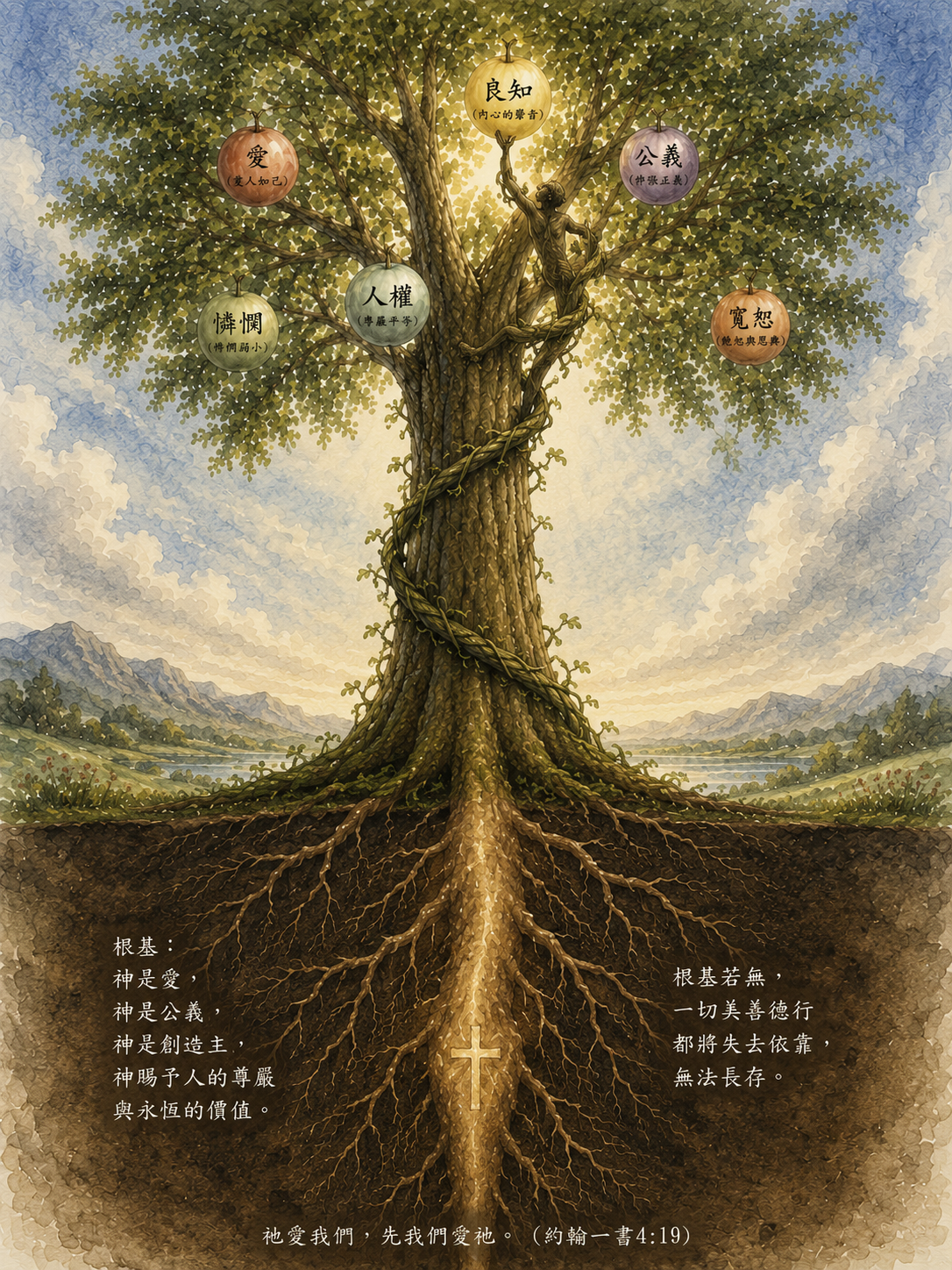
基督教的世界觀是建構性的,不需要寄生於其他文明或思想體系,就能夠自然生長出愛、公義、良知、憐憫、人權、寬恕等價值。因為在基督教看來,人是按著神的形象受造,每一個生命都具有神所賦予、不可剝奪的尊嚴;人與人之間之所以應當彼此相愛,不是因為這樣做更有利,而是因為神先愛了人。
The Christian worldview is inherently constructive. It does not need to borrow its moral foundation from another civilization or philosophy, for within Christianity itself arise the enduring ideals of love, justice, conscience, mercy, forgiveness, and human dignity. These values grow naturally from one central conviction: that every human being is created in the image of God. Human worth is therefore not earned by intelligence, wealth, achievement, or social status. It is bestowed by the Creator Himself and cannot be taken away. We are called to love one another not because love is merely useful or advantageous, but because God first loved us.
相反,無神論世界觀否認神這一終極根基,卻仍然試圖保留愛、人權、公義、平等等價值。問題在於,這些價值究竟建立在什麼基礎之上?如果沒有一個高於人的道德源頭,它們最終只能依附於歷史上由基督教或其他宗教文明長期孕育出來的倫理傳統,而難以僅憑自然本身獲得穩固的根基。今天許多無神論者也許真誠地關心公平、自由、人權和慈愛,但這並不能回答這些價值為什麼具有不可侵犯的客觀權威。
By contrast, the atheistic worldview rejects God as the ultimate source of reality while often seeking to preserve many of the same moral ideals—love, justice, equality, freedom, and human rights. The crucial question, however, is not whether these values are admirable, but why they possess objective authority. If there is no moral reality higher than humanity itself, upon what foundation do such values ultimately stand? Modern atheists may sincerely care about compassion, fairness, and human rights, yet sincerity alone cannot explain why these principles should be universally binding rather than merely personal or cultural preferences. Without a transcendent moral source, they remain difficult to ground in anything beyond inherited ethical traditions or social consensus.
如果生命只是粒子偶然碰撞、經過漫長自然過程形成的結果,如果宇宙本身沒有目的,善惡只是演化過程中形成的一種生存策略,那麼愛與犧牲、公義與寬恕、人權與尊嚴,究竟是真實存在的價值,還是生存壓力下逐漸形成的適應機制?一個隨機產生的體系可以形成複雜的結構,但是否能夠賦予它們客觀的意義與道德責任?如果沒有一位高於人的主宰,人為什麼應該愛陌生人?為什麼公義值得堅持?為什麼每一個生命都擁有不可侵犯的尊嚴?如果這些價值只是生存競爭中偶然形成的產物,那麼當它們與個人利益、國家利益或強者利益發生衝突時,我們又憑什麼仍然堅持它們?
If life is ultimately the product of matter, chance, and long natural processes, and if the universe itself possesses no purpose beyond its own existence, then what becomes of morality? Are love and sacrifice, justice and forgiveness, human rights and human dignity objective realities, or are they simply successful survival strategies shaped by evolution? A natural process may explain how increasingly complex organisms arise, but can it also explain why compassion ought to be preferred over cruelty, or why justice should prevail over power? Without a moral authority that transcends humanity, why should anyone love a stranger, defend the weak, or sacrifice personal interest for the sake of truth? And if our moral instincts are nothing more than products of evolutionary survival, what obligates us to uphold them whenever they conflict with power, self-interest, or national ambition?
無神論者常以進化論作為反對基督教的重要依據。然而,進化論本身是一種解釋生物多樣性和生命演化的科學理論,只要將它限定在生物學的範圍內,並沒有任何問題。真正值得討論的是,近代以來,自然主義世界觀常常把進化論提升為一把可以解釋人生、道德、歷史與文明的萬能鑰匙。當人不再承認有一位高於人的創造主,也不再承認人最終要向神負責時,道德便失去了終極根基,社會也容易逐漸滑向『物競天擇,適者生存』的思維方式。
For this reason, the central issue is not evolution itself. Evolution is a scientific theory that seeks to explain biological diversity and the development of life. Within the proper scope of science, it serves a legitimate purpose. The philosophical question arises only when evolution is expanded into a comprehensive worldview—when naturalism claims that it can explain not only biology, but morality, meaning, history, and civilization as well. Once humanity is understood as accountable to no Creator beyond itself, moral obligation no longer rests upon an enduring foundation. The danger is not the science of evolution, but the assumption that a process describing biological change can also provide the final explanation for justice, conscience, and the purpose of human life.
兩種世界觀最深刻的差異,不在於它們對某一個問題的不同看法,而在於它們如何回答人生最根本的問題:人是誰?生命從哪裡來?人生是否具有目的?道德從何而來?又是什麼賦予每一個人不可取代的價值?這些問題的答案,最終決定了一個文明如何看待自己,也決定了它將走向何方。
The deepest difference between these two worldviews does not lie in their answers to a single issue, but in the way they address the most fundamental questions of human existence. What is a human being? Where does life come from? Does life possess an objective purpose? What is the source of morality? And what gives every person inherent worth? The answers to these questions ultimately shape not only individual lives, but the character and direction of entire civilizations.
基督教相信,人是按著神的形象受造,因此每一個人都具有與生俱來、不可剝奪的尊嚴;人的屬靈生命高於物質生命,真正的滿足不僅來自物質,更來自與神恢復正確的關係。相反,自然主義的無神論通常認為,人是漫長自然演化的產物,人的思想、道德和宗教經驗,都可以理解為生物演化與環境適應的結果。
Christianity teaches that every human being bears the image of God. Human dignity is therefore intrinsic rather than earned, and the deepest needs of the human heart are ultimately spiritual rather than merely material. By contrast, a naturalistic worldview generally understands humanity as the outcome of undirected natural processes, with consciousness, morality, and even religious experience arising through biological evolution and environmental adaptation.
基督教相信,人生具有神所賦予的目的。每個人都領受不同的恩賜,也肩負不同的責任;我們不僅活在今生,更要為自己的生命向神交帳。因此,工作、家庭、藝術、科學和文化,都可以成為榮耀神、服事他人的途徑。自然主義則通常認為,宇宙本身沒有預設的目的,生命的意義需要由人自己創造;因此,人生最終的方向,也只能建立在人自己的選擇之上。
Christianity understands life as a divine calling. Every person is entrusted with unique gifts and responsibilities, and life is lived before God, to whom we are ultimately accountable. Work, family, science, art, and culture therefore become meaningful expressions of faithful stewardship. A naturalistic worldview, however, generally holds that the universe possesses no inherent purpose, leaving human beings to construct meaning for themselves through personal choice and experience.
因此,在面對弱者、公義、權力和國家的問題時,兩種世界觀也自然走向不同的方向。基督教相信,每一個人都是神所愛的,因此孤兒、寡婦、病人、殘障者和貧窮的人,同樣具有不可侵犯的尊嚴;真正的公義並不取決於多數人的意志,也不取決於掌權者的利益,而是根植於神永恆不變的公義。若否認任何高於人的終極權威,社會最終便只能依靠人的理性、權力或共識來維持秩序,而這些基礎,也都可能隨著時代和權力的更替而改變。
These contrasting foundations naturally lead to different understandings of justice, political authority, and the treatment of the vulnerable. Christianity affirms that every person—including the poor, the weak, the sick, and the forgotten—is worthy of love because each bears God’s image. Justice is not determined simply by majority opinion or political power, but reflects the unchanging character of God. If no authority exists beyond humanity itself, then moral order ultimately rests upon human reason, social consensus, or political power—foundations that inevitably shift with history and circumstance.
歷史也提醒我們,一種思想的影響,往往不只停留在哲學層面,也可能逐漸塑造整個社會對人的理解。當一種原本屬於自然科學的理論,被提升為解釋人生、道德、政治與歷史的終極原則時,它便不再只是科學,而成了一種世界觀。十九世紀以後,一些思想家將「適者生存」直接推廣到社會、政治與經濟領域,形成後來所謂的社會達爾文主義(Social Darwinism),並對優生學、殖民主義以及某些種族主義思想產生了深遠影響。當然,今天多數生物學家並不認為這些思想是現代演化生物學本身的必然結論。
History reminds us that ideas rarely remain confined to the realm of philosophy. They gradually shape the way entire societies understand human nature and human value. A scientific theory may remain entirely legitimate within its own discipline, yet once it is elevated into a comprehensive explanation of morality, politics, and civilization, it becomes something more than science—it becomes a worldview. During the nineteenth century, concepts associated with ‘survival of the fittest’ were extended far beyond biology into social and political thought, contributing to what later became known as Social Darwinism. These ideas influenced movements such as eugenics, imperialism, and certain forms of racial ideology. It is important to recognize, however, that most contemporary biologists do not regard these developments as necessary conclusions of modern evolutionary science.
近代西方對人權的理解,則提供了另一個值得思考的例子。《美國獨立宣言》宣告:「人人生而平等,他們的造物主賦予他們若干不可剝奪的權利。」這並不是偶然的措辭,而是反映了猶太—基督教傳統對人的理解:人的尊嚴首先來自受造的身分,而不是來自能力、財富、地位或社會的認可。正因如此,人權並不是政府所賜予的特權,而是任何政府都無權剝奪的權利。
The modern understanding of human rights offers a different historical example. The United States Declaration of Independence proclaims that all people ‘are endowed by their Creator with certain unalienable Rights.’ This language was not accidental. It reflects the profound influence of the Judeo-Christian tradition, which understands human dignity as flowing first from humanity’s identity as God’s creation rather than from wealth, ability, social status, or political recognition. From this perspective, human rights are not privileges granted by governments but rights that governments themselves are morally bound to respect.
二次世界大戰後的紐倫堡審判,也提出了一個重要的問題。許多納粹官員辯稱,他們只是遵守當時國家的法律與上級的命令。然而,法庭最終認定,仍然存在高於國家法律的人類共同正義標準,因此「合法」並不等於「公義」。這一案例至今仍被廣泛討論,因為它觸及了一個根本問題:如果不存在高於人的道德標準,我們又憑什麼批判那些合法卻極不公義的制度?
The Nuremberg Trials after the Second World War raised another enduring question. Many Nazi officials argued that they had merely obeyed the laws of their nation and the orders of their superiors. The tribunal nevertheless concluded that there exists a standard of justice higher than the laws of any particular state. What is legally permitted is not necessarily morally right. The case continues to be discussed because it asks a profound philosophical question: if no moral law exists beyond human authority, on what basis can we condemn laws that are legal yet deeply unjust?
二十世紀經歷了納粹德國、蘇聯大清洗、柬埔寨紅色高棉等重大歷史悲劇。這些事件的成因極其複雜,不能簡單歸結於任何單一哲學、宗教或科學理論。然而,它們共同提醒我們:當任何意識形態宣稱自己擁有對真理的最終解釋權,而不再承認有高於人的道德約束時,人性的黑暗便可能藉著龐大的權力,造成深重而持久的災難。
The tragedies of the twentieth century—including Nazi Germany, the Soviet purges, and the Khmer Rouge—were shaped by many historical, political, and cultural forces. No single philosophy, religion, or scientific theory can adequately explain them all. Yet together they offer a sobering reminder: whenever an ideology claims ultimate authority while denying any moral standard higher than itself, immense political power can become detached from moral restraint. History repeatedly shows how such conditions may lead to profound human suffering.
歸根結底,基督教與無神論之間真正的分歧,並不只是對神是否存在有不同答案,而是對整個世界如何成立有不同理解。如果人只是偶然出現於一個沒有目的的宇宙,那麼愛、公義、憐憫、寬恕、人權和尊嚴,便需要重新回答它們究竟建立在什麼根基之上;如果人是按著神的形象受造,這些價值便不只是人類文明長久形成的共識,而是源於創造主本身,具有超越時代、文化和權力的客觀意義。世界觀並非抽象的哲學,它最終決定了我們如何看待自己、如何對待他人,也決定了一個文明將走向何方。
Ultimately, the deepest difference between Christianity and atheism is not simply whether God exists, but how reality itself is understood. If humanity is the accidental product of a purposeless universe, then love, justice, mercy, forgiveness, human rights, and human dignity must all answer the same question: upon what foundation do they finally rest? If, however, human beings are created in the image of God, these values are more than the accumulated wisdom of civilization or the preferences of a particular culture. They reflect the character of the Creator Himself and therefore possess an enduring significance that transcends history, society, and political power. A worldview is never merely an abstract philosophy. It shapes how we understand ourselves, how we treat one another, and ultimately the kind of civilization we choose to build.